
Lion Pictures: Real Moments from the Wild
Lion pictures have a way of pulling people in. Not because they are dramatic, but because the best ones feel real. A moment that holds, where the animal is fully present and aware, not reacting to you but simply existing in its own space.
Over the years, lion pictures have become one of my main focus areas. Not because they are easy, but because they are not. Lions spend most of their time resting, often doing very little. The challenge is not finding them, it is waiting for something that matters. Unlike a model, a lion does not respond to direction. It decides the pace, the distance, and how close you are allowed to get.
That is where the work begins.

"Better to be a lion for a day than a sheep all your life."
African Proverb
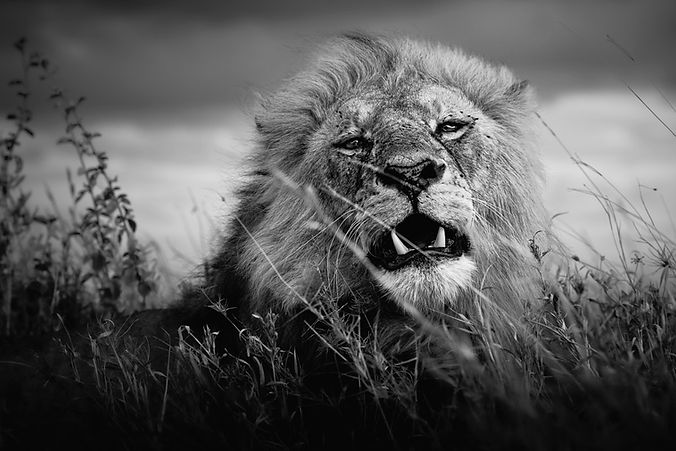
Male lions
The male lion is often seen as the protector of the pride, but in reality much of his time is spent moving, watching, and holding territory rather than constant confrontation.
This image came after several hours of following him on patrol. There was no obvious moment at first. Just slow movement, long pauses, and distance. Eventually he settled in a patch of grass close to the vehicle.
What made the image work was not the proximity, but the position. He stopped on slightly elevated ground, just enough to allow for a lower angle from the car. That shift changes the entire feel of the photograph. It gives the subject presence and control, rather than making it feel observed from above.
This image is called: "Within His Realm"
A Selection of Lion Pictures
Some lion pictures are built on tension, others on stillness. What connects them is not drama, but presence. These are the kinds of moments I keep returning to in the field.
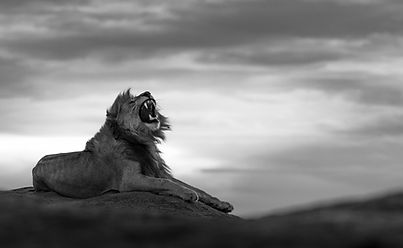
Male lion at sunset, captured in the final light as he lets out a deep yawn.

Male lion walking through open grassland, presented as a black and white lion portrait.

Young male lion resting in tall grass, presented as a black and white lion picture.
Lion behaviour and photography
Understanding behaviour is what makes the difference in lion photography.
Lions spend a large part of their time resting. It can look like nothing is happening, but this is often when the image begins to take shape. A resting lion is never fully switched off. There is always awareness just beneath the surface.
The key is learning to read the small signals.
A shift in posture.
Ears turning toward a distant sound.
Eyes opening slightly before the head lifts.
These are not dramatic moments, but they are the moments that lead to something. If you recognise them early, you are no longer reacting. You are ready.
A glance can be enough. Not a full stare, just a brief moment of acknowledgment. Those images often carry more weight than obvious action because they feel natural, not forced.
Movement follows a similar pattern. A lion rarely stands up suddenly. There is a sequence. The head lifts first, then the front legs stretch, followed by a pause before the body rises. When you understand that rhythm, timing becomes far more precise.
This is where most lion pictures fall short. They capture the subject, but not the moment.
Trying to force action rarely leads to strong images. Driving around looking for movement can make you miss what is already there. Staying with a subject, watching carefully, and allowing the moment to unfold almost always leads to something more meaningful.
These are the moments that tend to stay with you, and the ones that translate best into finished work.

What Most Lion Pictures Miss
Most lion pictures capture the subject, but not the moment.
Without timing, light, and awareness, the image becomes a record rather than something that holds your attention.

Male Lion Pictures in Black and White
Black and white simplifies a lion picture in a useful way. It removes distraction and lets structure, gaze, and posture carry more of the image.

Male lion resting on a rock, captured in the final light before nightfall.

Male lion standing above the plains in the Serengeti, where position and light define the image.

Male lion moving through tall grass, presented as a black and white lion picture.
Where My Lion Pictures Are Taken
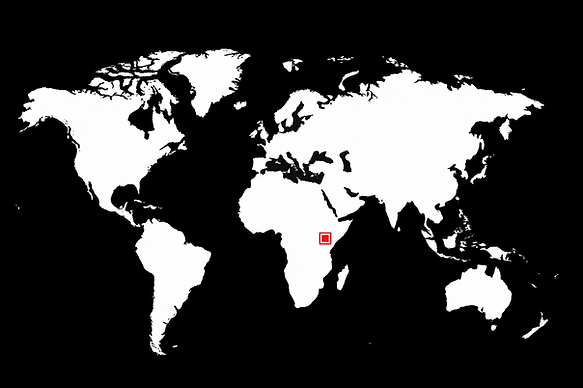
Most of my lion pictures are taken in East Africa, particularly in the Maasai Mara and the Serengeti ecosystem. These areas are not just known for strong lion populations, they also offer the kind of open landscapes that allow an image to develop properly.
Visibility plays a big role. In more open terrain, you can follow behaviour as it unfolds rather than reacting too late. You see the build-up, not just the result. That makes a significant difference to the final image.
Not all of my lion pictures come from these regions though. Different environments bring different challenges. Some limit distance and movement, others change how lions interact with their surroundings. The result is often a very different kind of photograph, less about scale and more about proximity.
Across all locations, one thing remains consistent. Timing matters more than anything else.
Moments with Lions
Observations from time spent with lions in the wild

What makes a great lion picture
A great lion picture is not defined by how close you are or how dramatic the scene appears. In my experience, it comes down to timing and awareness.
In the wild, you do not control the subject. You work within the conditions you are given, and those conditions shape the image.
What matters most is:
-
light that adds depth rather than flattening the scene
-
distance that allows the animal to remain natural
-
behaviour that feels unforced and real
When these come together, the image begins to hold.

The reality behind lion photography
There is a common idea that lion photography is about being in the right place at the right time. That is part of it, but it is far from the full picture.
Most of the work happens in between moments. Waiting, observing, and staying with a subject long enough for something to develop.
In practice, capturing meaningful lion pictures relies on:
-
patience to stay when nothing seems to be happening
-
consistency over multiple days in the field
-
an understanding of how lions move within their environment
The images that last are rarely accidental.

Why Black and White Lion Pictures.
Many of my lion pictures are presented in black and white for a reason. Removing colour simplifies the image and allows other elements to come forward.
In my experience, this works particularly well for lions.
It draws attention to:
-
the structure and form of the face
-
the texture and weight of the mane
-
the intensity and direction of the gaze
Without colour, the image becomes less about the environment and more about the presence of the animal.
This is often the point where a photograph begins to work as a finished piece, not just an image.

Quiet Lion Moments
Not every strong lion picture comes from movement. Some of the images that stay with me most are the quieter ones, where very little appears to be happening, but the animal is fully present.
From lion pictures to fine art prints
While this page focuses on lion pictures, some of these moments naturally move beyond the screen over time.
When I am out in the field, I take thousands of images, but only a very small number stay with me. The ones that do are rarely obvious at first. They tend to reveal themselves later, when you look back and realise there was more in the frame than you initially noticed.
Over time, a few of these photographs begin to carry a different kind of weight. They move beyond being a simple record and start to stand on their own, without needing context. That is usually where the transition happens from a photograph to a print.
The images you see in my collection of fine art lion prints are not selected because they stand out immediately. They are there because they continue to hold your attention over time, even outside the environment in which they were taken.
If you are looking for lion wall art or black and white lion prints, you can explore the collection below.
These are the same moments, presented as finished pieces, created to live beyond the screen and become part of a space.