Lion Portrait Photography: What Makes a Powerful Lion Portrait

Updated: Jul 30

A lion portrait is a photograph that captures the character, presence, and stillness of a lion, rather than action or behaviour.
See all my lion photographs for sale here When people think of lions, they usually think of movement. A charge. A roar. Dust flying.
But the lion portrait that stay with me are almost always the quiet one.
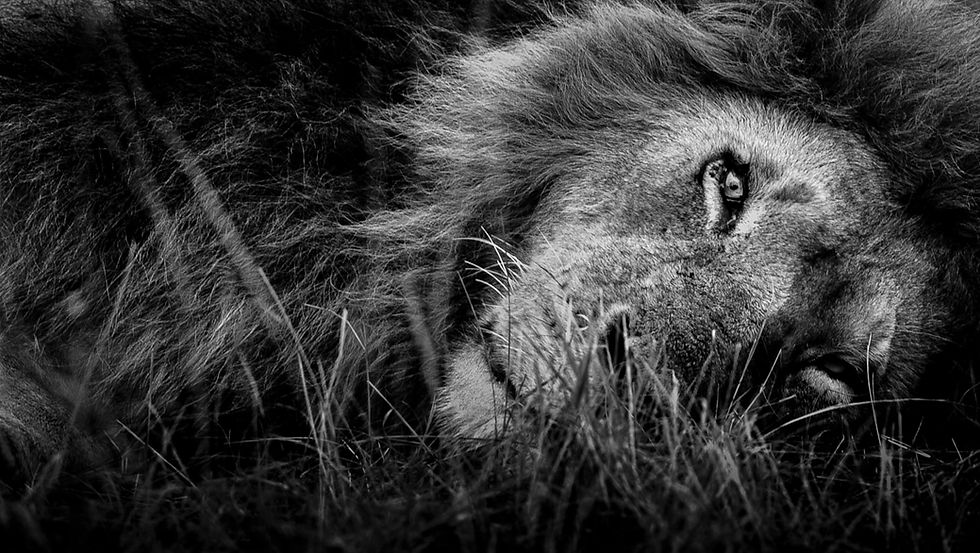
A print of a lion lying in the grass, watching. A moment where nothing dramatic happens, yet everything feels present. Those are the moments where a lion stops being a subject and starts feeling like an individual. That, to me, is where portrait photography begins.
After spending years photographing lions in Africa, I’ve learned that a strong lion portrait isn’t about proximity or technical perfection. It’s about whether the image still holds your attention once the excitement fades.
What Is a Lion Portrait?
A lion portrait or any big cat portrait photography is less about behaviour and more about character.
It’s not trying to show what a lion is doing. It’s trying to show what it feels like to be near one. That difference is subtle, but it matters.
In my opinion, most portraits that work have a sense of calm. The lion feels settled. Aware, but not disturbed. There’s no urgency in the frame. Of course, this is not the only way a portrait can work.
When that balance is right, the image feels honest, not forced.

Lion Portraits vs Action Photography
I enjoy photographing action as much as anyone. There’s adrenaline in it, and those images have their place.
But action images tend to demand attention. Portraits invite it.
When it comes to prints on a wall, I’ve found that many people live more easily with portraits. You don’t have to brace yourself every time you walk past them. They’re quieter, and because of that, they tend to last.
A good lion portrait doesn’t shout. It waits for you.
Presence Matters More Than Eye Contact
Eye contact can be powerful, but it isn’t a requirement.
Some of the strongest lion portraits I’ve made and seen from other photographers show the animal looking in another direction than straight in the camera. The sense of presence comes from posture and stillness more than from a direct stare.
What matters is that the lion feels comfortable in its own space. Once that comfort is there, the image settles too.

Background and Framing Are Easy to Overlook
Backgrounds rarely get the attention they deserve.
In lion portrait photography, less is almost always more. Clean backgrounds let the lion exist without competition. Tall grass, shadow, or open space can do far more than a busy environment ever will.
Framing plays a similar role. Too tight and the image feels aggressive. Too wide and the connection fades. Finding that middle ground is less about rules and more about paying attention to how the image feels when you look at it quietly.
Why Black and White Lion Portraits Often Works So Well
Colour can be beautiful, especially in soft light, but black and white has a way of stripping things back.
In a black and white lion portrait, texture takes over. The mane, the scars, the dust on the skin. Without colour, those details speak more clearly.
I often find that black and white portraits of lions feel more timeless and sophisticated. They ask less of the viewer and give more in return.
My Favourite Lion Portrait
One of my favourite lion portraits isn’t the one people usually expect.
There’s no drama in it. The lion is resting, aware of the camera, but uninterested in it. The gaze is calm. Almost neutral.
What I like about that image is how little it tries to do. It doesn’t push a narrative. It simply allows the lion to exist, and that restraint is what gives it weight.
Many of my favourite images felt unremarkable at first. It’s only with time that you realise they’re the ones that stay.

Choosing a Lion Portrait for Your Space
If you’re choosing a lion portrait as wall art, my advice is to think mainly about feeling.
Some portraits carry strength and authority. Others feel reflective or grounded. Neither is better, but they belong in different spaces.
Ask yourself whether you want the image to energise a room or calm it. The right portrait will answer that question quietly, without explanation.
Why Lion Portraits Last
Lion portraits last because they’re not tied to spectacle.
They don’t depend on a moment of action or a dramatic event. They rely on presence, and presence doesn’t age.
A strong lion portrait remains relevant because it speaks to something familiar. Stillness. Strength. Awareness. Things we recognise instinctively, even when we don’t name them.
That’s why these images endure, long after the moment they were taken has passed.
Lion Portrait FAQ
What is a lion portrait?
A lion portrait focuses on presence and character rather than action, often showing the lion in a calm, settled moment.
What makes a powerful lion portrait?
Stillness, balance, and the sense that the lion is comfortable in its space give a portrait lasting strength.
What is the difference between a lion portrait and an action photo?
An action photo shows what a lion is doing. A lion portrait shows who the lion feels like in that moment.
Do lion portraits work well in black and white?
Yes. Black and white often highlights texture, form, and expression, allowing the portrait to feel more timeless.
Are lion portraits suitable as wall art?
Lion portraits tend to work well as wall art because their calm presence makes them easy to live with over time.